

The Lodge Mission
The Fraternal Order of Police (FOP) is dedicated to supporting law enforcement officers, promoting professional standards, protecting members’ rights, and strengthening ties between officers and the communities they serve. Central to this mission is providing financial and emotional support to wounded officers and the families of officers who have made the ultimate sacrifice: the FOP raises funds through community events, donation drives, benefit concerts, and partnerships with local businesses, with proceeds directed to emergency relief, medical expenses, and family assistance. Greenville Lodge 17 actively contributes to these efforts by organizing fundraising drives, charity events, and public safety outreach across Greenville County and the surrounding area, while coordinating volunteer support for officers in need—delivering meals, assisting with household needs, and providing grief and recovery resources. Working in concert with our FOP lodge partners throughout the Upstate of South Carolina, Lodge 17 ensures that resources are distributed where they’re most needed and that officers and families receive prompt, compassionate support.

History
The Fraternal Order of Police (FOP) traces its origins to the early 20th century as law enforcement officers sought collective organization for mutual aid, professional development, and support. The organization most commonly recognized as the modern FOP was founded in 1915 in Pittsburgh, Pennsylvania, when a group of law enforcement officers organized to provide assistance to fellow officers and their families, promote camaraderie, and advocate for improved working conditions and professionalism within policing.
Early decades (1910s–1940s)
Foundation and mutual aid: The FOP began primarily as a fraternal benefit society, providing burial assistance, financial support to widows and dependents of fallen officers, and social connections among officers who often worked long, dangerous hours with limited institutional support.
Growth and local lodges: The model of local “lodges” spread quickly as officers in other cities and states established their own chapters to handle local needs while sharing the fraternal model and ritual.
World War II era: The war years and the postwar period brought growth in municipal policing and in the FOP’s membership as law enforcement became more professionalized and as communities expanded.
Postwar expansion and national organization (1950s–1970s)
National consolidation: By mid-century, the FOP had consolidated into a national organization with the ability to coordinate policy, legislative advocacy, and mutual support across states. The national structure enabled larger-scale benefits programs and a stronger collective voice on matters affecting policing.
Advocacy and labor issues: The FOP increasingly engaged in collective bargaining, pension advocacy, and legislative lobbying for officer safety measures, benefits, and standards for training and conduct.
Social and institutional change: The 1960s and 1970s saw major social unrest, civil rights struggles, and scrutiny of law enforcement practices. The FOP positioned itself as defender of officers’ rights, safety, and public order while also participating in debates on reform, training, and departmental accountability.
Modernization and national prominence (1980s–2000s)
Professional development and standards: The FOP expanded its role in training, certification, and support services for officers, including legal defense funds, scholarships, and wellness resources.
Political advocacy: The organization became an influential voice in state and federal policy debates—on matters such as officer safety, criminal justice legislation, funding for law enforcement, and protections for officers’ employment rights.
Public controversies and accountability debates: As public attention to use-of-force incidents and policing disparities increased, the FOP often found itself at the center of debates about transparency, discipline, and reform. The organization frequently advocated for due process protections for officers and emphasized support for law enforcement personnel confronting increasingly complex public safety challenges.
Contemporary role (2010s–present)
Support services: Today the FOP provides a range of member services including legal assistance, insurance and benefits programs, training and education, and peer support programs addressing officer mental health and wellness.
Political and legislative engagement: The FOP remains active at local, state, and national levels advocating for policies it views as strengthening public safety and officer welfare, while also campaigning on issues related to criminal justice policy, funding, equipment, and workplace protections.
Community relations and reform engagement: Many lodges and the national organization engage in community outreach, charitable efforts, and dialogues about reform—though national and local chapters differ in approach and emphasis. The FOP’s stances on reform proposals are often scrutinized and debated within broader conversations about policing, accountability, and public trust.
Structure and membership
Lodges and hierarchy: The FOP is organized into local lodges (often at city or county level), state lodges or associations, and a national organization that coordinates policy, publications, conferences, and national initiatives.
Membership: Membership is open to sworn law enforcement officers; categories may include active, retired, and auxiliary members depending on lodge rules.
Benefits and services: Typical offerings include insurance and financial products, scholarship programs, legal defense and representation, peer support, professional training, and fraternal activities.
Legacy and influence
Institutional impact: Over more than a century, the Fraternal Order of Police has had a significant influence on the professionalization of policing, the development of benefits and protections for officers, and policy debates affecting public safety.
Continuing debates: The FOP’s role remains contested in public discourse—praised for its support of officers and advocacy for safety, criticized by some who argue it impedes accountability or resists certain reforms. These debates reflect broader societal questions about the balance between officer protections, community oversight, and the goals of modern policing.
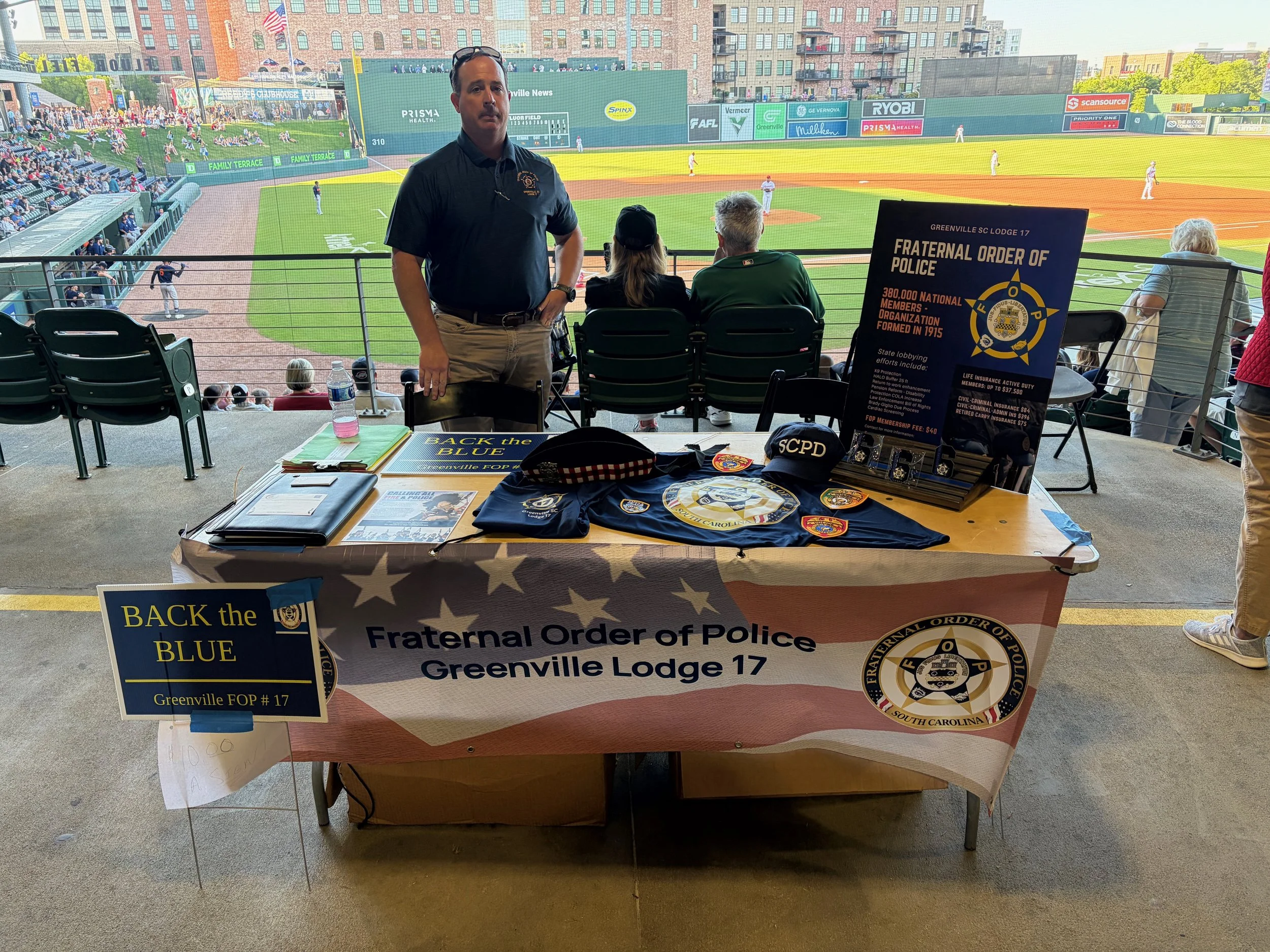
Join today!
Join the Fraternal Order of Police — Greenville Lodge 17 today.
Stand with the brotherhood and sisterhood that protects and advances the interests of law enforcement professionals at every level.